
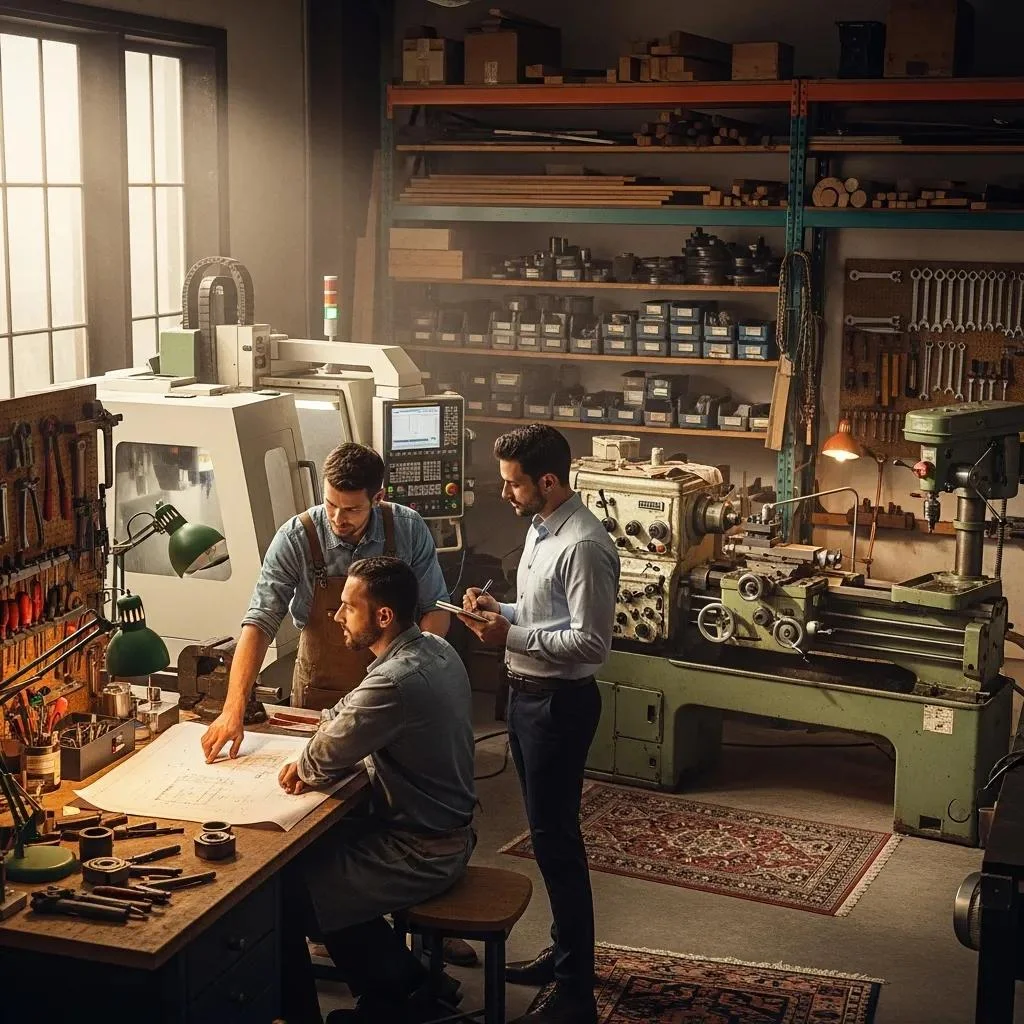
Choosing between a new or used machinery loan is a practical decision that affects cash flow, production capacity and long‑term returns. This guide breaks down what a machinery loan is, how equipment financing helps MSMEs and manufacturers, and the real financial and operational differences between buying new versus pre‑owned machines. You’ll find typical loan terms, how warranties and new technology change the value equation, why used equipment can speed deployment and shorten payback, and which government supports may lower borrowing costs for small manufacturers. We also map the eligibility steps, required documents and a simple framework you can use to model total cost of ownership (TCO) and expected ROI. Terms such as machinery loan consultant, equipment financing comparison and MSME machinery loan schemes India are included to help manufacturers in Ludhiana, Punjab and beyond make a confident financing choice.
A machinery loan is a type of equipment finance that covers buying, installing or upgrading industrial equipment so manufacturers can add capacity without tying up working capital. Lenders usually fund a percentage of the machine’s invoice value and set repayment over a fixed tenor at an agreed interest rate. That structure preserves liquidity while letting producers meet orders, upgrade processes and improve output. For manufacturers, the decision between new and used equipment affects production continuity, maintenance planning and long‑term asset value—so understanding the basics helps you choose the right route.
Machinery loans provide clear operational benefits for manufacturing teams:
These practical advantages lead into how machinery loans specifically support MSMEs and the common loan terms to expect.

Machinery loans let MSMEs make scalable investments that sync with production demand and cash‑flow cycles. Financing equipment helps small manufacturers accept bigger orders, diversify products or add automation without using cash for raw materials and payroll. Think of a textile unit upgrading looms to cut defects, or an auto‑parts shop adding CNC capability to win higher‑margin contracts—financing accelerates those capability gains. In regional hubs like Ludhiana and across Punjab, quick access to equipment finance can be the difference between winning a time‑sensitive job and missing out.
Next we’ll look at the loan mechanics you’ll encounter when applying for machinery finance.
Loan terms usually specify loan‑to‑value (LTV), tenor, interest rate, collateral needs and repayment frequency. Lenders set these based on asset type, borrower credit and equipment age. Typical LTVs range from 70%–90% for new equipment; used equipment often draws lower LTVs (about 50%–70%) and shorter tenors because of residual‑value uncertainty. Interest rates depend on lender type, borrower risk and any subsidies in play. Repayments can be monthly, quarterly or structured to match seasonal cash flows. Knowing these terms helps you plan for maintenance, insurance and whether to bundle service contracts into the finance package.
With those mechanics clear, it’s easier to weigh the case for new machinery loans versus used alternatives.
New machinery financing delivers the latest technology, OEM warranties and predictable operating costs—factors that can boost throughput and lower unit costs. Modern machines offer greater automation, tighter tolerances and improved energy efficiency, which often translate into higher yields and lower variable costs. Lenders tend to view new equipment as lower risk and may offer better tenors or higher LTVs under certain schemes. Warranty and service agreements further reduce unplanned downtime, making new machinery loans a strong choice when long‑term productivity and product quality are priorities.
The table below shows how new equipment attributes map to financing and operational benefits.
| Asset Type | Attribute | Typical Value/Impact |
|---|---|---|
| New Machine | Warranty | OEM warranty lowers early repair costs and reduces downtime |
| New Machine | Energy Efficiency | Modern drives and controls cut operating costs per unit |
| New Machine | Financing Profile | Often eligible for higher LTVs (up to 90%) or longer tenors (5–7 years) with predictable residuals |
Warranty and maintenance terms on new machines reduce early‑life failure risk and make budgeting simpler.
New machines raise efficiency through automation, precise controls and integration with digital monitoring—cutting cycle times and scrap rates. Features like automated feeds, servo drives and better tooling increase throughput and reduce reliance on manual labour, lowering cost per unit and human error. Energy‑efficient components and improved process control reduce utility and rework costs, helping margins even after financing costs. For example, a 20% cycle‑time reduction can materially shorten payback and make the cost of borrowing much easier to absorb as throughput rises.
New equipment typically comes with OEM warranties and optional service contracts that shift early maintenance risk away from the operator. Warranties usually cover manufacturing defects and major components for 1–3 years, while service agreements provide preventive upkeep to keep uptime high. That predictability lowers the contingency reserve you need during the loan term and can support longer tenors or more favourable pricing. When comparing loan offers, look beyond headline rates and include the expected savings from warranty‑backed uptime.
In short, warranty‑backed new equipment reduces cash‑flow variability and influences loan structuring and operational resilience.
Used machinery loans make sense when lower upfront cost, immediate availability and acceptable performance yield faster payback despite higher maintenance risk. Pre‑owned machines often cost 30%–70% less than new equivalents, shrinking the loan amount and accelerating ROI even if efficiency gains are smaller. For manufacturers facing tight deadlines or project‑based demand, used equipment can let you fulfil orders quickly and avoid long lead times for new builds. This approach works well where proven durability matters more than cutting‑edge features or when conserving capital is the priority.
To compare these trade‑offs, the table below highlights common attributes of used machines that affect financing decisions.
Used machinery shortens procurement time and reduces initial borrowing—two factors that improve short‑term ROI calculations.
| Asset Type | Attribute | Typical Value/Impact |
|---|---|---|
| Used Machine | Purchase Price | Lower upfront cost reduces loan size and initial cash outflow |
| Used Machine | Lead Time | Faster acquisition enables deployment within weeks to capture contracts |
| Used Machine | Depreciation Pattern | Flatter depreciation after purchase can stabilise TCO |
Lower purchase prices mean smaller loans and reduced interest over the term, which shortens payback even when efficiency gains are modest versus new machines. Cutting the principal borrowed brings down financing cost and helps you reach cash‑flow breakeven sooner—critical for short‑cycle orders. But factor in reconditioning and higher ongoing maintenance when modelling TCO. A realistic ROI model compares purchase plus refurbishment costs and expected throughput improvements against the reduced financing burden to find the true payback period.
Used equipment markets and brokers can enable same‑month procurement, whereas new builds often take several months (3–6+ months). Fast acquisition lets manufacturers respond to immediate opportunities or replace failed machines quickly, preserving contracts and revenue. That speed requires proper due diligence: inspections, test runs and possible refurbishment must be budgeted to confirm performance. When timing matters more than the latest features, the trade‑off of higher near‑term maintenance risk for rapid operational readiness often favours used equipment financing.
Quick acquisition can win time‑sensitive work, but you should still compare lifecycle costs before deciding.
A side‑by‑side view shows new machines carry higher upfront cost and steeper early depreciation but offer lower maintenance risk and warranty support; used machines reduce initial capital but usually increase contingency reserves and maintenance uncertainty. To assess TCO combine purchase price, expected maintenance, energy and labour impacts, resale value and financing charges over the holding period. Decision models that include depreciation curves, downtime risk and payback timelines give an objective basis for choosing the financing route. The table below offers a compact comparison to help scan key differences quickly.
| Asset Category | Financial Attribute | Operational Impact |
|---|---|---|
| New Machine | Higher upfront cost | Lower short‑term maintenance and OEM support |
| Used Machine | Lower purchase price | Higher refurbishment needs and potential downtime risk |
| New Machine | Faster technology‑driven savings | Higher early depreciation but better long‑term value retention in many cases |
This comparison reinforces why you must model financing costs and operational savings together; the sections below dig deeper into depreciation and maintenance factors that shape those models.
New machines lose value fastest in the early years, which affects residual assumptions lenders use; used equipment often follows a flatter depreciation curve after purchase. For lenders this usually means more conservative LTVs and shorter tenors for used assets. Resale market liquidity also matters—well‑maintained mainstream machines can hold value better, but specialised equipment may be hard to resell regardless of age. Factor realistic resale expectations into amortisation schedules to avoid surprises at loan end.
With depreciation understood, it becomes clearer how maintenance and warranty shift effective ownership costs.
Maintenance needs and warranty coverage affect required loan size and your operating cash flow because unexpected repairs can strain resources while repaying the loan. Warranties and service contracts reduce contingency reserves, which lenders view favourably and which can support longer tenors or better pricing under some schemes. Conversely, used machinery usually needs a higher maintenance reserve and may require insurance riders, raising effective borrowing cost even when the nominal loan is smaller. Structuring finance to include maintenance reserve lines or short‑term refurbishment funding can mitigate these risks and align repayments with expected cash‑flow improvements.
Objective modelling of these scenarios helps decide which option gives the better net cost and ROI; service partners often assist with that analysis.
Ultimate Associates Private Limited provides advisory support to model ROI scenarios and match manufacturers with loan products tailored to equipment age, maintenance expectations and resale assumptions. Our focus is on cutting paperwork friction and aligning financing with operational timelines so clients can make data‑driven choices.
Eligibility depends on business credentials, financial performance and the asset being financed. Lenders look at turnover, credit history, GST/MSME registration and the equipment’s invoice and supplier credibility. MSMEs enrolled in recognised schemes or holding valid registrations may access collateral‑free or subsidised products, while consistent bank statements and audited accounts strengthen approvals. Timelines commonly range from 1–3 weeks for used equipment to 4–8+ weeks for complex new‑build finance, but organised documentation and a clear application speed underwriting. Knowing each step helps you gather the right paperwork and set realistic expectations for approval and disbursement.
Use the checklist below to prepare for a typical lender process.
Lenders typically ask for business registration (GST certificate or MSME registration), identity and address proofs of owners, audited financials or ITRs, recent bank statements, equipment quotations or proforma invoices and supplier credentials. Additional documents may include installation plans, sales contracts proving future revenue to service the loan, and collateral paperwork where needed. For used equipment, inspection reports or refurbishment estimates support valuation. Preparing these documents in advance reduces processing time and keeps the approval timeline predictable.
Working with an intermediary to coordinate documents can streamline underwriting and reduce back‑and‑forth.
Ultimate Associates Private Limited helps manufacturers by assessing eligibility, organising documents, and matching clients to lenders to simplify the machinery loan journey. We aim to minimise paperwork and clarify lender requirements so underwriting moves faster for both new and used equipment financing. Our support includes reviewing quotations, preparing documentation and liaising with lenders—actions that speed approvals and improve the fit between borrower needs and available loan products. Manufacturers in Ludhiana and Punjab who use local advisory support typically see shorter processing times and better alignment between equipment choice and financing terms.
Our practical assistance also helps you identify government schemes that can lower borrowing costs for MSMEs.

Several government‑backed schemes and credit guarantee programmes improve access to equipment finance for MSMEs by reducing collateral needs or subsidising interest—making machinery loans more attainable for small manufacturers. These programmes can provide credit guarantees that encourage banks and NBFCs to lend, or offer subsidies and capital support for technology upgrades. For some manufacturers, these incentives tip the balance toward new equipment when subsidies offset higher upfront costs; for others, collateral‑free options enable urgent replacements. Understanding scheme eligibility and documentation rules is essential to capture these benefits during application.
Common scheme types and their practical advantages include:
Collateral‑free and subsidised loans lessen upfront burden by removing the need to pledge fixed assets and by lowering effective borrowing costs through interest concessions or partial credit support. These options expand access for firms without large property assets or those who prefer not to encumber existing collateral, enabling investment in productivity‑boosting equipment. Eligibility rules still apply, so careful preparation is necessary, but these products can be the decisive factor between delaying an upgrade and making a transformative investment.
Local consultants can help firms assess scheme fit and complete applications efficiently.
Local consultancy services combine regional market knowledge with lender relationships to speed procurement, valuation and scheme navigation for machinery finance in Ludhiana and across Punjab. Advisors who know local sub‑sectors—textiles, auto parts and similar industries—recommend finance structures that match typical cash flows and supplier lead times. They also help prepare documentation and connect clients with lenders or schemes most likely to approve the application. Manufacturers who use local advisory expertise usually enjoy faster processing and better alignment between equipment choice and financing terms.
Ultimate Associates Private Limited offers tailored advisory services focused on MSME machinery loans, helping manufacturers evaluate financing pathways and complete applications with minimal paperwork.
We provide an initial consultation and eligibility review to model ROI, compare new‑versus‑used financing scenarios, and highlight scheme‑level or lender‑specific advantages. If you’d like a personalised equipment financing assessment, request a consultation or quote—our process emphasises client‑first service, minimal paperwork and practical lender coordination to accelerate approvals.
Compare upfront cost, expected maintenance, performance needs and timing. New machinery brings advanced tech and warranties that improve reliability and quality. Used machinery lowers upfront cost and shortens lead time but may increase maintenance risk. Also weigh cash flow, order book and long‑term goals before choosing.
Model purchase price, financing cost, maintenance, energy use and expected resale value over the holding period. Include warranty or service contract savings and any refurbishment for used equipment. Comparing TCO for both options gives a clearer view of the true long‑term cost.
Government schemes can provide credit guarantees, interest subsidies and collateral‑free options that lower borrowing barriers for MSMEs. These supports may make new‑equipment finance more attractive or enable critical replacements without tying up assets—so understanding eligibility and documentation is important.
Prepare documents in advance—business registration, financials, bank statements and equipment quotations. Do a pre‑application assessment to confirm eligibility and consider using a consultant to coordinate paperwork and liaise with lenders. Clear communication speeds approval and disbursement.
Risks include higher maintenance costs, uncertain reliability and lower resale value. Unexpected repairs can strain cash flow if the machine needs refurbishment. Thorough inspections and a conservative TCO model help manage these risks.
Depreciation influences residual value and lender risk. New machines depreciate fastest early on, while used machines often show a flatter curve after purchase. Lenders may offer lower LTVs or shorter tenors for used assets, so factor depreciation into amortisation and financing choices.
Local consultants bring regional market knowledge, lender relationships and practical experience with MSME schemes. They help match finance structures to cash flows, prepare documentation and shorten approval times—making the process smoother and more likely to succeed.
The right choice between new and used machinery loans depends on your priorities: speed and lower upfront cost, or warranty protection and long‑term efficiency gains. Model both financing and operational impacts—TCO, depreciation, maintenance and payback—to find the best fit for your business. If you want help running the numbers or navigating schemes and lenders, reach out to a trusted machinery loan consultant like Ultimate Associates for a practical, low‑paperwork assessment and a tailored financing plan.
Leave A Comment